
For gas chromatographers, dealing with high temperatures is routine. One of the most common questions we have received from customers is: What is the maximum temperature a GC column can reach?
We try to answer this question along with some recommendations in this post
Columns with polar stationary phases are more susceptible to damage and degrade at a faster rate when exposed to excessively high temperatures, than columns with non-polar phases. Thermal damage is evident as excessive column bleed and peak tailing for active compounds. Loss of retention and efficiency (resolution) may be evident for severe cases of thermal damage. Temperature limits do not have any extra safety factors built into the values. Maintaining the column below its upper temperature limits should be practiced to ensure reasonable column life and performance.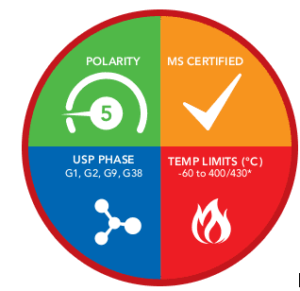
Column temperature limits may differ slightly between the same phase with different film thickness. There is an inverse relationship between the film thickness and the upper temperature limit when working with the same stationary-phase. For example:
- ZB-1 (30m x 0.32mm x 0.25µm) – 360/370 °C iso/grad
- ZB-1 (30m x 0.32mm x 5.00µm) – 340/360 °C iso/grad
But sometimes, even when the phase and the dimensions are the same, the column temperature limits may be different among different manufacturers. So it is always good practice to check the column package and accompanying documentation for the manufacturers recommended temperature limits. Be careful to distinguish between a high temperature version of a stationary phase and the regular version with all the accessories related. A standard silica column may reach up to 360°C depending on various parameters as discussed above, while the high temperature or HT version of the same column may reach up to 400°C or 430°C. If you need to develop a method at higher temperature because you are dealing with very high boiling compounds you may have to choose the high temperature version that has a metal capillary tube and can reach 450° C!
When working with high temperatures we highly recommend to use only accessories designed for high temperature analysis, like Siltite ferrules, HT Guard Columns and last but not least gas management filters,which ensure all gases that reach the GC system and the columns, are free from Oxygen and other contaminants that may break the column, especially when working with high temperature and reduce the amount of damage due to the presence of oxygen at high temperature.
Choosing the right GC column and accessories is essential for reliable results and longer column life.
Applied Analytical Systems Ltd (AASL) offers the supply of GC columns, gas management filters, and other laboratory equipment and accessories, alongside expert technical support to meet your laboratory needs.
📩 Contact us today: aas@aasnig.com
Let AASL be your trusted partner for quality laboratory solutions!
Reference: GC Technical Tip (phenomenex.com)